The box says replace every 90 days. That advice was written for a climate somewhere else. In San Antonio and the surrounding South Texas area, your AC filter works harder than the manufacturer ever anticipated. Heat, dust, caliche soil, cedar pollen, and a system that runs nine-plus months a year change the equation entirely. At Murray AC, we’ve been servicing South Texas homes since 1995 and we’ve seen firsthand what happens when filters get ignored in this climate. Here’s what the actual replacement schedule should look like, and what a clogged filter does to your system when you let it go too long.
Why South Texas Is Harder on AC Filters Than Most Places
Most filter replacement guidelines are based on average conditions: moderate climate, occasional system use, no unusual air quality concerns. South Texas checks none of those boxes.
San Antonio sits in one of the highest cedar fever zones in the country. Between December and February, mountain cedar pollen saturates the air at levels that can overwhelm a standard 1-inch filter within weeks. Add the caliche dust that blows across the Hill Country and you’ve got a combination that clogs filters fast.
Then there’s the runtime factor. An AC system in Minnesota might run five months a year. A system in San Antonio runs most of the year, often cycling for 12-16 hours a day during peak summer. More runtime means more air pulled through the filter and faster buildup.
The Actual Replacement Schedule for South Texas Homes
Here’s a practical baseline based on conditions in this region.
- 1-inch standard filters (MERV 1-8): every 30-45 days during peak season, every 60 days in winter
- 2-inch filters: every 45-60 days in summer, every 90 days in winter
- 4-inch media filters: every 3-6 months, check them quarterly
- 5-inch media filters: every 6-12 months, but still check quarterly
These ranges shift based on your situation. Homes with pets, high foot traffic, or nearby construction need more frequent changes. Single-occupant homes with no pets can stretch toward the longer end.
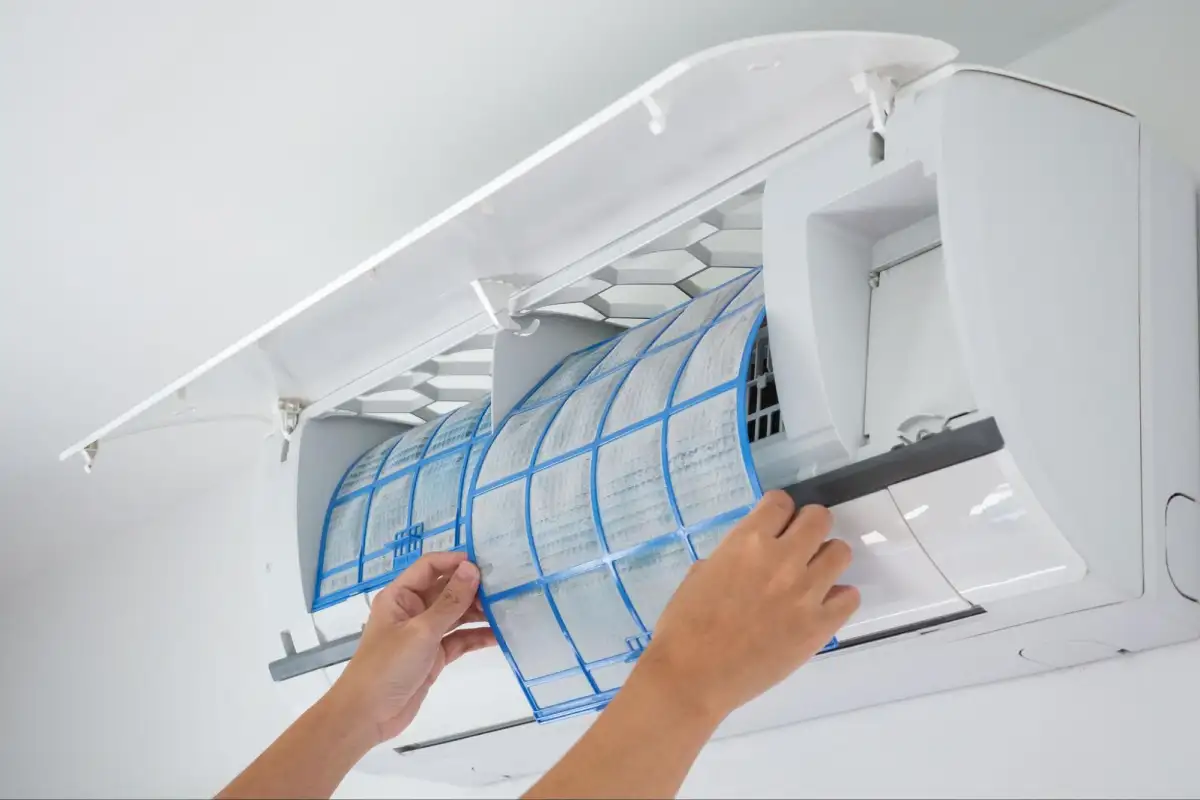
The real test: pull the filter out and hold it up to a light source. If you can’t see light through it, it’s overdue. Don’t wait for a schedule to tell you what your eyes can see.

What a Clogged Filter Actually Does to Your System
A dirty filter doesn’t just mean slightly dustier air. It restricts airflow across the evaporator coil, and that’s where the real damage starts.
When airflow drops, the evaporator coil can’t absorb heat efficiently. In some cases it gets too cold and freezes over. You’ll notice this as ice forming around the indoor unit or water pooling on the floor when it melts. A frozen coil also means your system can’t cool your home, so it runs longer trying to catch up.
Over time, low airflow forces the blower motor to work harder. That extra strain shortens the motor’s life. It also causes the compressor to operate under higher pressure, which is how you end up with compressor failures that run $1,500 to $2,500 to fix. All because a $10 filter didn’t get changed on time.
MERV Ratings: Higher Isn't Always Better
MERV ratings measure how fine the filter’s mesh is. Higher MERV means smaller particles get caught. A MERV 13 filter traps bacteria, smoke particles, and fine dust. Sounds great. But in most residential HVAC systems, a high-MERV filter creates more airflow restriction than the system can handle.
If your equipment isn’t designed for it, running a MERV 13 in a system rated for MERV 8 does the same thing a clogged filter does, it chokes airflow and creates the exact problems you’re trying to avoid.
The sweet spot for most San Antonio homes is MERV 8 to MERV 11. Good filtration without strangling your system. If you have allergy concerns or a family member with respiratory issues, talk to a technician about whether your system can support a higher rating before you switch.
A Simple System for Staying on Top of It
The easiest way to manage filter changes is to stop relying on your memory. Buy filters in bulk, usually a six-pack or a year’s supply, and store them right next to your air handler. Set a recurring phone reminder for the appropriate interval based on your filter type.
If you’re on a maintenance plan, your technician will check the filter at every scheduled visit. That’s one of the underrated parts of routine maintenance, it catches the things you forget.

When to Call a Professional
If you’ve been running on a clogged filter for a while and you’re now noticing reduced airflow, warm air from vents, unusual sounds, or ice on the unit, don’t just swap the filter and hope for the best. The system may have developed secondary issues that need a proper diagnosis.
Murray Air Conditioning serves San Antonio and South Texas and offers maintenance plans that include filter checks, coil cleaning, and a full system inspection. Staying ahead of small problems is almost always cheaper than reacting to big ones. Contact us to schedule an appointment.
Frequently Asked Questions
Eventually the filter gets so clogged that airflow drops to a point where the system can’t function properly. You’ll likely see a frozen evaporator coil, warm air from your vents, and a system that runs nonstop without cooling your home. Left long enough, it can cause permanent damage to the blower motor and compressor.
Yes. Once a filter is saturated, it stops catching new particles and can actually push debris back into the air. During cedar season in San Antonio, that’s a real problem. A fresh filter is one of the cheapest things you can do for your indoor air quality.
Not necessarily. A mid-range MERV 8 to MERV 11 filter changed on a regular schedule will outperform an expensive MERV 13 that’s been sitting in the unit for six months. Consistency matters more than the price tag on the box.
Check the filter slot on your air handler. The dimensions are printed on the frame of your current filter. Common sizes in residential systems are 16×20, 20×25, and 16×25, but it varies by unit. When in doubt, take the old filter to the hardware store with you.
For most South Texas homes, a mid-grade filter in the MERV 8-11 range hits the sweet spot. Cheap fiberglass filters (MERV 1-4) barely catch anything useful. Premium filters can restrict airflow in systems not built for them. Stick to the middle and change them on schedule.