An oversized AC is not better. Neither is an undersized one. Getting the wrong size wastes money in one direction or another, either through higher energy bills, premature equipment failure, or a house that never feels comfortable. In South Texas, where your system runs nine or more months out of the year, the stakes are higher than in cooler climates.
At Murray AC, we’ve sized and installed systems in San Antonio homes since 1995, and we still see units that were clearly picked based on a guess or a shortcut. Here’s how to figure out what your home actually needs.
How AC Sizing Works
Air conditioners are measured in tons. One ton of cooling equals 12,000 BTUs per hour. A typical residential system ranges from 1.5 tons to 5 tons. The "ton" has nothing to do with weight. It refers to the amount of heat the unit can remove from your home in an hour.
Most San Antonio homes fall somewhere between 2.5 and 5 tons, depending on square footage, insulation, layout, and a handful of other factors. A 1,500 square foot home might need a 3-ton unit. A 2,800 square foot two-story might need 5 tons, or two smaller systems on separate zones.
The goal isn't to buy the biggest unit that fits. It's to match the cooling capacity to the actual heat load of your specific home.

The Square Footage Rule (And Where It Breaks Down)
The most common shortcut is 1 ton per 500 to 600 square feet. For a 2,000 square foot home, that puts you at roughly 3.5 to 4 tons. As a starting point, it's fine. As a final answer, it's not.
Square footage alone doesn't account for ceiling height, insulation quality, window count and orientation, roof color, attic ventilation, ductwork condition, or how many people live in the home. Two houses with identical floor plans on the same street can have different cooling needs based on which direction they face and how much shade they get.
In San Antonio specifically, west-facing homes with large windows take on significantly more heat in the afternoon than homes facing north. An attic with poor insulation above the second floor can add 20 to 30 percent to your cooling load. The square footage formula misses all of this.
What Actually Affects the Size You Need
Several factors beyond square footage determine the right unit size for your home.
Insulation and envelope
Older South Texas homes, especially those built before the 1990s, tend to have less insulation than current building codes require. Poor insulation in the attic or walls means more heat gets in and more cool air leaks out. That increases the load your AC has to handle.
Older South Texas homes, especially those built before the 1990s, tend to have less insulation than current building codes require. Poor insulation in the attic or walls means more heat gets in and more cool air leaks out. That increases the load your AC has to handle.
Windows
Single-pane windows transfer heat much faster than double-pane. Large windows without low-E coating on the south and west sides of a home are some of the biggest contributors to cooling load. The number, size, and orientation of your windows matters as much as your square footage.
Single-pane windows transfer heat much faster than double-pane. Large windows without low-E coating on the south and west sides of a home are some of the biggest contributors to cooling load. The number, size, and orientation of your windows matters as much as your square footage.
Ceiling height
Standard sizing assumes 8-foot ceilings. If your home has 9, 10, or 12-foot ceilings, there’s more air volume to cool, and the tonnage needs to reflect that.
Standard sizing assumes 8-foot ceilings. If your home has 9, 10, or 12-foot ceilings, there’s more air volume to cool, and the tonnage needs to reflect that.
Ductwork
Leaky or undersized ducts reduce the amount of cool air that reaches your rooms. A properly sized AC connected to damaged ductwork will underperform, making the home feel like the unit is too small when the real issue is delivery.
Leaky or undersized ducts reduce the amount of cool air that reaches your rooms. A properly sized AC connected to damaged ductwork will underperform, making the home feel like the unit is too small when the real issue is delivery.
Occupancy and heat sources
A family of five generates more body heat than a couple. A kitchen that gets heavy use adds heat. A home office full of electronics adds heat. These are smaller factors individually, but they add up.
A family of five generates more body heat than a couple. A kitchen that gets heavy use adds heat. A home office full of electronics adds heat. These are smaller factors individually, but they add up.
Sun exposure and landscaping
A home shaded by mature oak trees on the south and west sides will have a measurably lower cooling load than an identical home sitting on an open lot with full sun exposure all afternoon.
A home shaded by mature oak trees on the south and west sides will have a measurably lower cooling load than an identical home sitting on an open lot with full sun exposure all afternoon.
Why Oversizing Is Just as Bad as Undersizing
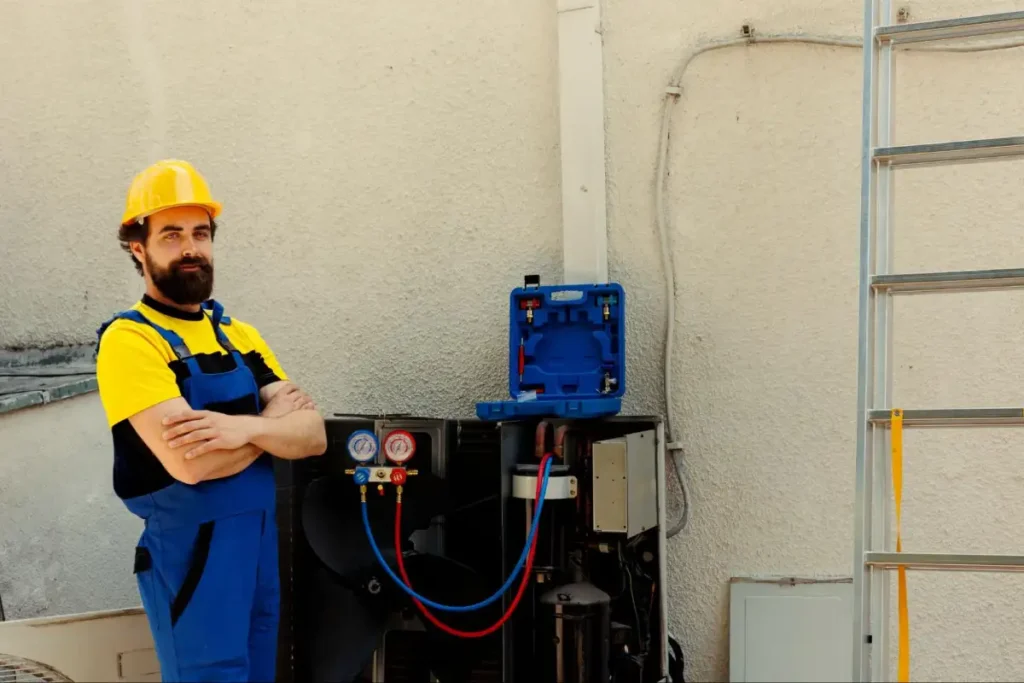
Most homeowners assume bigger is better. It's not. An oversized AC cools the air quickly, but it shuts off before it can properly remove humidity. In South Texas, where humidity is a real part of the discomfort equation, this creates a home that feels clammy and cold at the same time.
Short cycling, where the system turns on and off in rapid bursts, also wears out the compressor faster. Compressors are designed for longer run cycles, not constant starting and stopping. An oversized unit will likely fail sooner than a properly sized one, and compressor replacement runs $1,500 to $2,800.
On the flip side, an undersized unit runs nonstop trying to keep up and never reaches the set temperature on the hottest days. That drives up energy bills and puts constant strain on every component in the system.
The right size runs in steady, efficient cycles. It cools the air and removes humidity without short cycling or running all day.
The Right Way to Size an AC: Manual J Load Calculation
A Manual J calculation is the industry standard for determining the correct AC size. It accounts for every variable that affects your home's cooling load: square footage, insulation R-values, window types and orientation, ceiling height, duct conditions, number of occupants, local climate data, and more.
The calculation produces a specific BTU number for your home, which a technician then matches to the closest equipment size. It takes the guesswork out of the process entirely.
Any reputable HVAC company should perform a load calculation before recommending a system. If someone quotes you a tonnage after a five-minute walkthrough or based only on your square footage, get a second opinion. A system that costs $6,000 to $12,000 installed deserves more than a ballpark estimate.
When Murray AC performs an AC installation, a load calculation is part of the process. It’s the only way to make sure the equipment matches the home.
When to Get a Professional Assessment
If you're replacing an existing system, don't assume the old unit was the right size. It may have been oversized from the start, or your home may have changed since it was installed (new windows, added insulation, a room addition). A fresh load calculation takes current conditions into account.
If your current system runs constantly without reaching the set temperature, short cycles every few minutes, or leaves the house humid even when the air feels cool, sizing could be the root cause.
Murray Air Conditioning serves San Antonio and the surrounding South Texas area. We’ll assess your home, run the numbers, and recommend a system that fits. No guessing. Schedule a consultation or call us at 726-232-4437.
Frequently Asked Questions
The rough estimate is 3.5 to 4 tons, but the actual answer depends on your insulation, windows, ceiling height, and sun exposure. A Manual J load calculation gives you the precise number. Homes with poor insulation or large west-facing windows may need more.
Not always. The original unit may have been improperly sized, or your home's conditions may have changed. A load calculation based on current conditions is the safest way to make sure the replacement fits.
It short cycles, turning on and off in quick bursts. That fails to remove humidity, wears out the compressor faster, and often leaves the home feeling cold but damp. You'll also face higher repair costs over the life of the unit.
Many HVAC companies include the calculation as part of a new system quote at no extra charge. As a standalone service, it typically costs $150 to $300 depending on the size and complexity of the home.
For two-story homes or homes with large footprints, two smaller systems on separate zones often cool more evenly than one oversized unit. Each zone runs independently, so the upstairs can get more cooling during the afternoon without overcooling the downstairs.