Your air conditioner didn’t send a calendar invite for the day it would start failing. It just starts costing more, cooling less, and breaking down at the worst possible times. If you’re wondering whether repairs are still worth it or whether a new system makes more sense, you’re asking the right question at the right time. As of January 2025, the Environmental Protection Agency banned manufacturers from producing new systems that use R-410A, the refrigerant found in most Texas homes built in the last 15 years. As of this year, contractors can only source recycled or reclaimed R-410A for service work, and prices are rising fast. If your system is aging and runs on R-410A, that changes the repair-versus-replace math in a real way.
Here’s how to know where you stand.
Your System Is 10 Years Old or More
Most residential AC units last somewhere between 10 and 15 years in regular climates. In Texas, where your system runs hard from April through October, you’re often looking at the lower end of that range. A 12-year-old unit running through San Antonio summers has put in serious work.
Age alone doesn’t mean replace it immediately. But age combined with any of the other factors below is usually a clear signal.
One thing worth tracking is how old your system was when you moved in. A lot of homeowners don’t know the install date offhand, but your HVAC technician can pull that from the unit’s serial number in about two minutes. Knowing where you actually stand on the timeline changes how you weigh every repair decision going forward.
Your Energy Bills Keep Climbing
If your usage habits haven’t changed but your electric bills have, your AC is likely working harder than it should to deliver the same amount of cooling. Efficiency degrades over time, especially if the system hasn’t been maintained consistently. A modern high-efficiency unit can run at 18-20 SEER2 ratings compared to the 10-12 SEER systems installed a decade ago. Over a Texas cooling season, that difference shows up in your bill every month.
Pull up your electric bills from the past three summers and compare them side by side. If you’re seeing a steady climb without a clear explanation like a rate increase or a new addition to the house, your AC is the most likely culprit. That kind of slow efficiency bleed is easy to miss month to month but adds up to real money over a season.
You're Calling for Repairs Too Often
Getting repairs for your AC every few years is normal. One repair every season is a pattern. Here’s a good way to think about it, if a repair costs more than half the price of a new system, or if you’ve paid for multiple repairs within the same 12-month window, you’re likely spending good money to keep a failing system limping along. That math rarely works out in your favor.
It also helps to think about what’s failing. A capacitor replacement is cheap and not necessarily a sign of bigger problems. A compressor replacement on a 13-year-old unit is a different conversation entirely. When a technician tells you what needs to be fixed, ask them to give you an honest read on what else is likely coming. A good tech will tell you straight.
Some Rooms Won't Cool Down
Uneven cooling, where bedrooms stay stuffy while the living room gets cold, can point to a few different problems. Sometimes it’s ductwork, but in older systems, it often means the unit has lost the capacity to distribute air the way it once did. A properly sized modern system with variable-speed technology handles this much better than the single-stage equipment that was standard 10 to 15 years ago.
Texas humidity makes this worse. When an AC loses capacity, it often loses the ability to pull moisture out of the air before it can’t keep up with the heat load. The result is a house that feels clammy and uncomfortable even when the thermostat reads a reasonable temperature. If your home feels muggy on top of cooling unevenly, that’s two problems pointing at the same root cause.
Your System Uses R-410A and Needs a Refrigerant Recharge
This is the one most homeowners haven’t heard yet, and it matters.
R-410A was the industry standard refrigerant from around 2010 until January 2025, when the EPA prohibited manufacturers from producing new systems that use it. If your system was installed before 2025, it almost certainly runs on R-410A. That refrigerant isn’t illegal to use in existing equipment, but the supply picture has changed significantly.
As of January 2026, HVAC contractors can only use recycled or reclaimed R-410A for service work. Virgin R-410A production has been cut substantially, and prices have already risen as a result. If your system develops a refrigerant leak or needs a recharge, you can expect to pay more for that service than you would have two years ago. And that cost will keep climbing as supply tightens over the next several years.
New systems installed today use R-454B or R-32, both of which carry a much lower environmental impact. Existing R-410A systems cannot be retrofitted to use the new refrigerants since the systems were designed around different pressures and components. If your R-410A unit is older and develops a refrigerant issue, the repair cost versus replacement calculation shifts pretty quickly.
What to Do If You're Not Sure
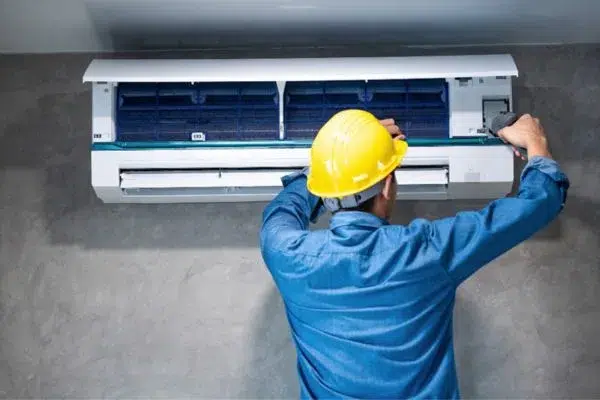
A straightforward service call can tell you a lot. A Murray Air Conditioning technician can assess your system’s efficiency, check for refrigerant issues, and give you an honest read on how many useful miles are left in it. Sometimes a well-maintained system has several good years ahead. Sometimes the numbers point clearly toward replacement.
Either way, you’ll know what you’re actually dealing with rather than guessing. Call Murray Air Conditioning to schedule your assessment and get a straight answer on where your system stands.